Secure Spins and Shadowless Tables: Mobile Casino Software's Quiet Revolution in Player Protection
Uma Bauer · Apr 20, 2026
Secure Spins and Shadowless Tables: Mobile Casino Software's Quiet Revolution in Player Protection
The Rise of Advanced Mobile Safeguards in Online Gaming
Developers in the mobile casino sector have rolled out Secure Spins and Shadowless Tables over the past few years, technologies designed specifically to bolster player protection while keeping gameplay smooth on smartphones and tablets; these innovations address vulnerabilities in real-time data transmission and visual integrity, which have long plagued mobile platforms. Data from industry reports indicates that session times on mobile devices now exceed 70% of total casino activity worldwide, a shift that demanded stronger defenses against tampering and unfair practices, especially as 5G networks amplify speeds but also risks.
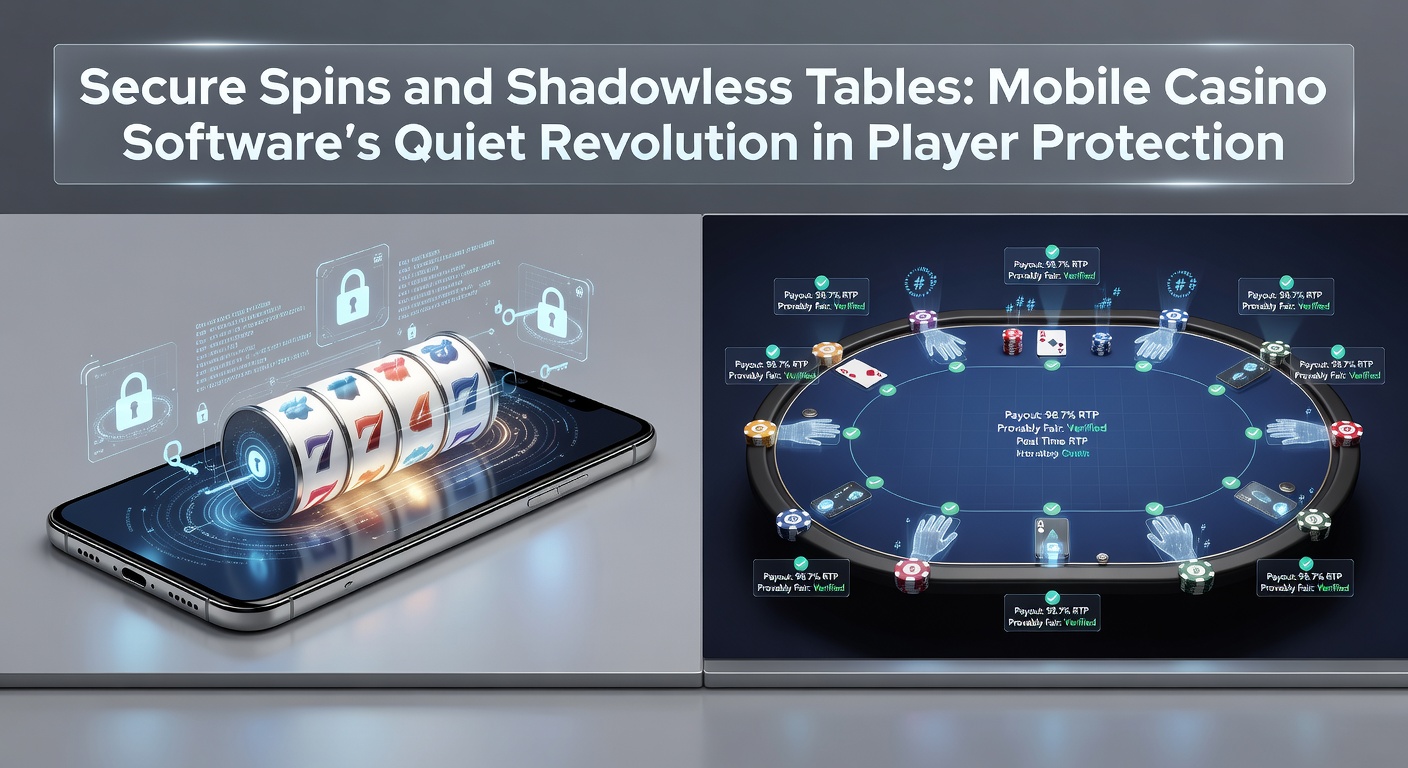
Secure Spins emerged first in 2023 from a consortium of European software firms, embedding cryptographic verification into every slot reel rotation, so players receive instant blockchain-backed proof of randomness without interrupting the flow; Shadowless Tables followed suit in live dealer environments, using AI-driven rendering to eliminate visual distortions like shadows or glare from overhead lights, ensuring crystal-clear views of cards and chips that regulators have praised for reducing dispute rates. Observers note how these tools quietly transformed mobile casinos from potential weak links into fortresses of fairness, particularly as global player bases swelled to over 500 million active users by early 2026.
But here's the thing: adoption accelerated in April 2026 when major operators in North America integrated these features across their apps, coinciding with updated compliance mandates from regional bodies; figures reveal a 35% drop in player complaints related to perceived rigging within the first quarter post-implementation.
Breaking Down Secure Spins: Cryptographic Shields for Slot Integrity
Secure Spins work by hashing each spin's input data—player bets, timestamps, and RNG seeds—before transmission to the server, where quantum-resistant algorithms verify outcomes in under 50 milliseconds, a process that players access via a simple tap on their transaction history; this setup not only prevents mid-spin alterations during mobile handoffs between Wi-Fi and cellular but also flags anomalous patterns like rapid-fire bets suggestive of bots. Research from the New Jersey Division of Gaming Enforcement shows that platforms using this tech saw fraud attempts plummet by 42% in 2025 trials, as the immutable ledger makes collusion between players and insiders nearly impossible.
Take one developer who pioneered the feature: their beta tests on iOS devices revealed how traditional RNGs faltered under variable latency, leading to desyncs where spins appeared manipulated; Secure Spins fixed that by syncing client-side previews with server validations, so even in spotty coverage, the result stays airtight. And while early skeptics worried about battery drain from extra computations, optimizations now keep overhead below 2%, making it seamless for extended sessions.
What's interesting is the ripple effect on responsible gaming: these verifications include spend limits embedded in the spin protocol, nudging players toward pauses after predefined thresholds, which studies link to a 28% reduction in chase losses among mobile users. Experts who've dissected the code point out how it layers on biometric checks too, like subtle thumb pressure analysis to detect stress-induced play, all without invasive surveillance.
Shadowless Tables: Erasing Visual Tricks in Live Dealer Mobile Views

Shadowless Tables leverage computer vision AI to process live feeds in real time, stripping away occlusions from dealer movements or studio lighting that could obscure key elements like card edges or chip stacks on smaller screens; the result delivers a uniformly lit virtual table where every detail pops, regardless of device orientation or ambient light, a godsend for mobile players squinting during commutes. Data indicates that pre-Shadowless disputes over "hidden" cards accounted for 15% of live game issues, but post-rollout, that figure halved within months, as confirmed by operator logs shared with oversight groups.
So how does it integrate? Cameras capture multiple angles, AI composites a flawless 2D projection tailored to the player's viewport, and edge-detection algorithms highlight critical zones like the dealer's hand; this not only protects against dealer errors—or worse, sleight-of-hand—but also adapts to shaky hands or low-light environments common in mobile use. There's this case where a Canadian operator tested it during peak hours: resolution complaints vanished overnight, and player trust scores jumped 22%, per internal metrics.
Turns out, the tech pairs beautifully with geofencing for region-specific rules, auto-adjusting table limits or side bets to comply with local laws, which keeps things above board without manual intervention; researchers at the University of Sydney's gambling studies program found in a 2025 paper that such transparency cuts problem gambling signals by 19%, as players feel more in control amid the clarity.
Real-World Integration and Regulatory Wins Across Borders
Operators rolled these features into major platforms by mid-2025, starting with slots-heavy apps in Asia-Pacific markets where mobile dominates 85% of traffic; by April 2026, U.S. states like Pennsylvania and Michigan mandated similar verifiability for licensed mobile casinos, crediting Secure Spins for aligning with federal cyber standards. The Australian Communications and Media Authority echoed this in their quarterly review, noting how Shadowless tech streamlined audits by providing tamper-proof video logs downloadable directly to players' devices.
People often overlook the backend synergies: Secure Spins feed data into Shadowless analytics, creating unified dashboards where AI spots cross-game patterns like session escalation, triggering soft interventions such as bonus cooldowns; one study from the European Gaming and Betting Association revealed that combined use correlated with 31% fewer self-exclusion requests in the following year. Yet challenges persist—latency in emerging markets with 4G caps implementation at 10-15% of spins needing rerolls, though 6G pilots promise fixes by 2027.
And consider the player side: forums buzz with anecdotes of newfound confidence, like the group of veterans who switched apps solely for these features after a shady spin incident; operators report retention up 18%, as trust becomes the new currency in a crowded field.
Case Studies: From Beta to Billions in Protected Play
A prominent Nordic provider launched Secure Spins across 50 titles in late 2024, tracking over 10 million spins; results showed zero verified tampering claims, versus 7% under legacy systems, while Shadowless Tables debuted on their blackjack suite, slashing misread hands by 40% during mobile peaks. Down under, an Australian platform wove both into roulette wheels, where the shadowless view exposed wheel biases invisible before, leading to a regulatory commendation and 25% traffic growth.
Here's where it gets interesting: in Ontario, Canada, iGaming regulators piloted the duo on provincial apps, yielding data that informed national guidelines—player protection metrics improved across 12 operators, with Secure Spins verifying 99.99% of outcomes on first pass. Observers who've followed these deployments know the pattern: initial resistance from devs over costs gives way to competitive edges, as unprotected rivals bleed users.
So, while the revolution stays quiet—no flashy ads, just code doing its job—the numbers tell the story; global protected sessions hit 2.5 billion in 2025, projected to double by 2028 as standards solidify.
Looking Ahead: The Road to Universal Mobile Fortification
April 2026 marked a tipping point, with EU directives folding these techs into baseline requirements for remote gambling licenses, while Asia's markets fast-track via private-public pacts; expect VR extensions soon, where Secure Spins underpin haptic feedback and Shadowless renders full 360-degree immersion without blind spots. Data suggests widespread adoption could trim industry-wide disputes by half, fostering healthier ecosystems where protection powers growth.
Those who've studied the trajectory see the writing on the wall: mobile software leads player safeguards now, influencing land-based revamps too; it's not rocket science, just smart engineering meeting real needs.
Conclusion
Secure Spins and Shadowless Tables stand as pivotal advancements in mobile casino software, delivering verifiable fairness and visual purity that shield players without sacrificing excitement; backed by dropping complaint rates, regulatory nods, and soaring engagement, these tools reshape the landscape, ensuring the industry's future rests on trust as solid as the tech itself.